
When budgets get tight, floor maintenance is often one of the first line items that gets pushed back. After all, the floors still look “fine” — so why spend the money right now?
The problem is that “fine” is doing a lot of work in that sentence. Commercial floors that aren’t regularly maintained don’t just look worse over time — they cost your business significantly more in the long run. From premature replacement to legal liability, the hidden costs of neglected floors add up fast. Here’s what Bismarck business owners need to know.
1. Premature Floor Replacement
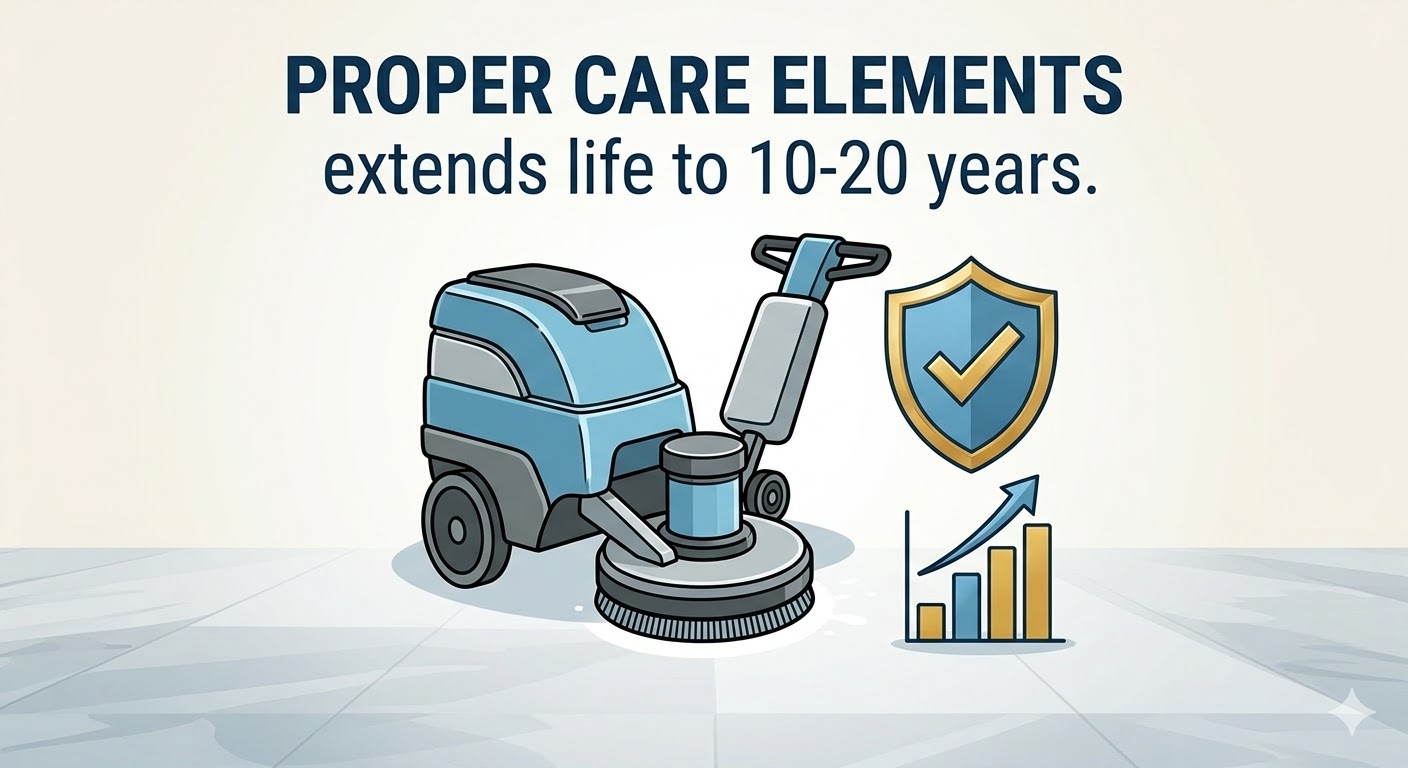
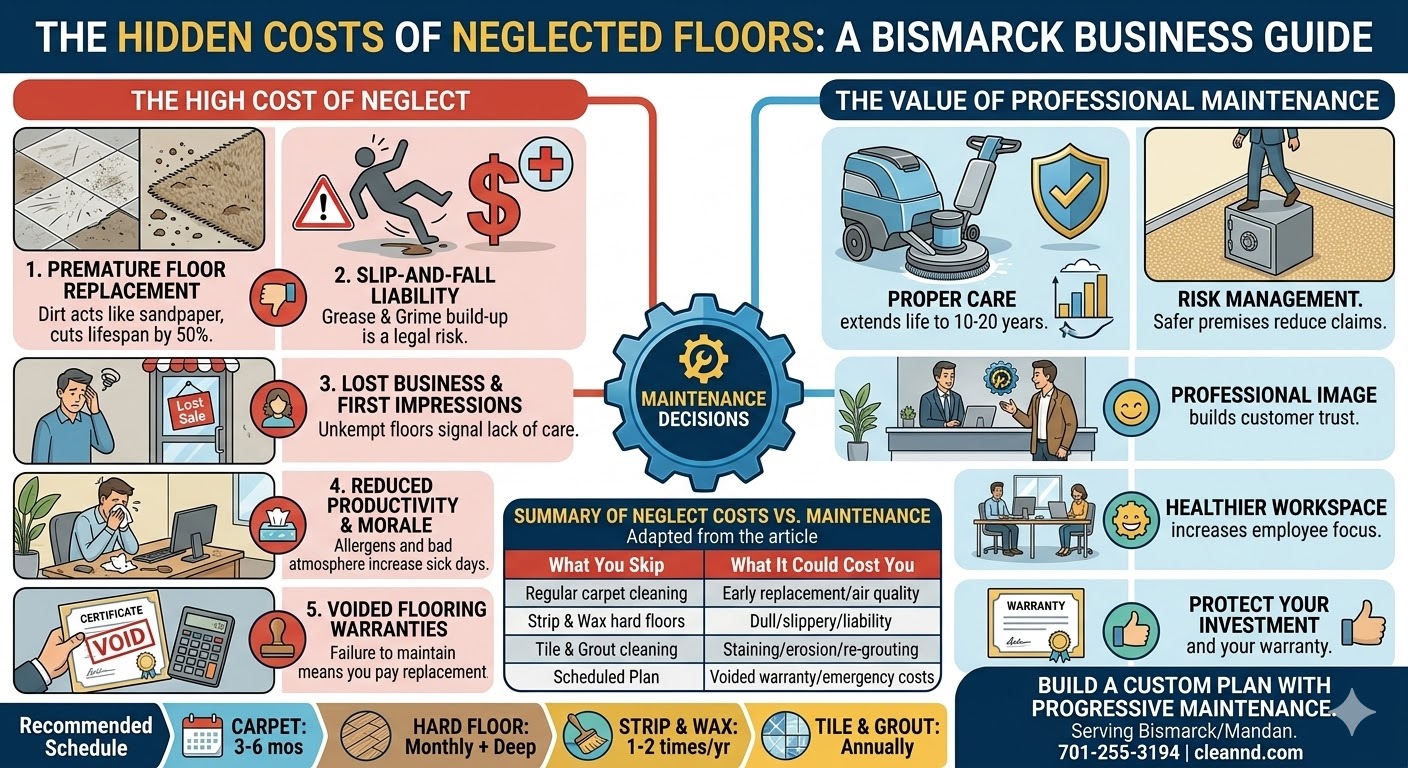
Commercial flooring — whether it’s carpet, vinyl tile, hardwood, or ceramic — is a significant capital investment. With proper care, most commercial flooring can last 10–20 years. Without it, you could be looking at replacement in half that time.
Here’s why: dirt and grit act like sandpaper on floor surfaces. Every time someone walks across an unmaintained floor, those abrasive particles grind into the material, breaking down fibers, dulling finishes, and eroding tile grout. Regular professional cleaning — including stripping and waxing hard floors and deep cleaning carpets — removes that abrasive buildup before it causes permanent damage.
The bottom line: Replacing commercial flooring in even a mid-sized office can cost tens of thousands of dollars. Routine maintenance is a fraction of that cost.
2. Slip-and-Fall Liability
This is the hidden cost that can be the most financially devastating. Dirty or poorly maintained hard surface floors — particularly tile, vinyl, and hardwood — can become dangerously slippery. Buildup of grease, wax residue, moisture, and grime creates conditions ripe for slip-and-fall accidents.
In a commercial setting, a single slip-and-fall incident can result in workers’ compensation claims, personal injury lawsuits, increased insurance premiums, and serious reputational damage. In North Dakota, business owners have a duty of care to maintain safe premises — and a poorly maintained floor can be cited as evidence of negligence.
The bottom line: Regular professional floor cleaning isn’t just a cleanliness issue — it’s a risk management strategy.
3. Lost Business and Damaged First Impressions
Whether you’re running a retail store, a medical practice, or a professional services firm, the condition of your floors sends a message to every client and customer who walks through your door. Studies on consumer behavior consistently show that cleanliness is one of the top factors influencing how customers perceive a business’s quality and professionalism.
Stained carpet in a waiting room. Dull, scuffed floors in a showroom. Grimy tile in a hallway. These details don’t go unnoticed — and they can quietly cost you business without you ever realizing it.
The bottom line: Your floors are part of your brand. A clean, well-maintained space signals professionalism, attention to detail, and that you care about the experience of the people who visit.
4. Reduced Employee Productivity and Morale
The workspace environment directly impacts how employees feel about coming to work. Dirty, worn floors contribute to a generally unkempt office atmosphere — one that can affect morale, focus, and even retention. Beyond aesthetics, poorly maintained carpets harbor allergens, dust mites, and bacteria that degrade indoor air quality, leading to more sick days and reduced productivity.
The bottom line: A clean workplace is a productive workplace. The cost of a cleaning schedule is negligible compared to the cost of employee absenteeism or turnover.
5. Voided Flooring Warranties
Many commercial flooring manufacturers include maintenance requirements in their warranty terms. Failing to follow a regular professional cleaning schedule can void your warranty entirely — meaning if a defect emerges or the floor fails prematurely, you’re on the hook for the full replacement cost.
The bottom line: Before you skip that next cleaning service, check your flooring warranty. You might be protecting an investment worth far more than the cleaning cost.
At a Glance: The Real Cost of Neglect
Here’s a quick summary of what skipping regular floor maintenance can actually cost your business:
| What You Skip | What It Could Cost You |
| Regular carpet cleaning | Early replacement, allergen buildup, poor air quality |
| Strip & wax for hard floors | Dull, slippery surfaces and slip-and-fall liability |
| Tile & grout cleaning | Permanent staining, grout erosion, costly re-grouting |
| Scheduled maintenance plan | Voided warranty, reactive emergency costs |
How to Avoid These Costs: A Simple Maintenance Plan
The good news is that avoiding all of the above is straightforward with a consistent, professional floor maintenance schedule. For most Bismarck commercial properties, that means:
- Carpet cleaning: Every 3–6 months depending on traffic and industry
- Hard surface floor cleaning: Monthly cleaning with periodic deep treatment
- Strip & wax: 1–2 times per year for vinyl and composite tile floors
- Tile & grout cleaning: Annually or as needed for high-moisture areas
At Progressive Maintenance, we work with each client to build a custom maintenance plan that fits their schedule, budget, and floor types — so nothing gets overlooked and no cost sneaks up on you.
Don’t wait until a floor failure forces your hand. Contact Progressive Maintenance today at 701-255-3194 or visit cleannd.com to schedule a walkthrough and get a customized floor maintenance plan for your Bismarck or Mandan business.